
Application examples
The following application examples show you the possible uses of our products in practice.
Filter application examples
12 Application examples match your search criteria
Comparing Plain Text and DMC-Codes
In modern production facilities, where traceability and quality control are essential, reading OCR and DMC codes on components plays a key role. These codes are used not only for identification, but also to ensure complete traceability of products and components throughout complex manufacturing processes. A reliable vision system must not only recognize OCR and DMC codes, but also compare them against each other.

Effortless Traceability: Displaying code contents, texts,
In modern manufacturing, the need for seamless component traceability (Track-and-Trace) continues to grow. Data Matrix Codes (DMCs) have emerged as one of the most reliable methods for identification and traceability. The goal is to scan the Data Matrix Code on each component, guaranteeing precise product processing and flawless serial number management.
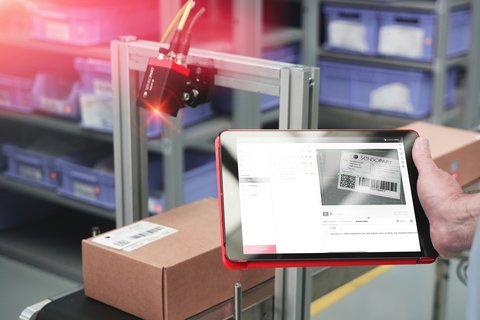
Fast, Easy Code Reading in Just a Few Clicks - No Expertise Needed
Every day, countless packages are shipped around the world. To ensure each one can be tracked reliably, shipping labels must be read accurately, often containing barcodes, QR codes, or DataMatrix codes. A vision sensor is used to automatically identify and decode these labels. However, proper setup is required before the sensor can perform this task effectively, and this setup process is often the first obstacle.
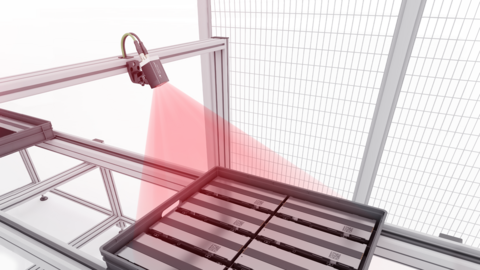
Identification by means of directly marked codes
Each component installed in a battery pack usually has a directly marked code on it. Before the components are installed in the housing bottom part, this code must be read out and transmitted to the higher-level control system for subsequent tracking.
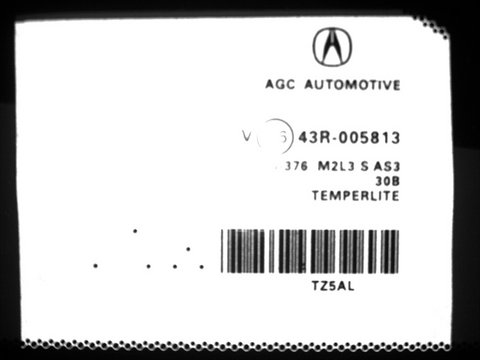
Reading DOT codes on vehicle windows
Vehicle windows must be identified during production and mounting processes to avoid mix-ups with similar windows. The aim of the application is that a window is clearly identified by means of a DOT code.
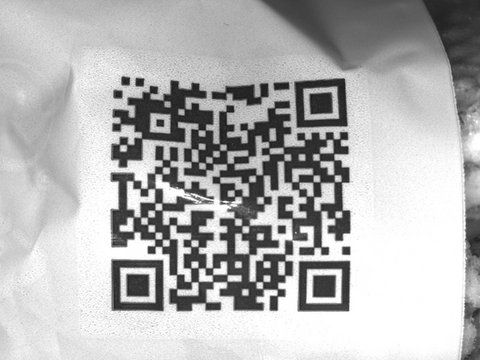
Reading QR codes on plastic film
After food is packed, QR codes are to be read on the packaging to check the legibility of the code and to read the content.
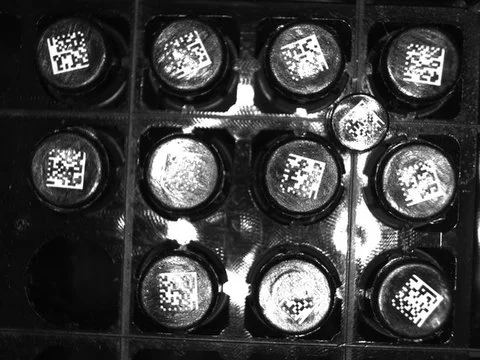
Reading a DMC on test tubes
Test tubes have DMCs measuring 3 x 3mm in size with 14 x 14 modules. The aim of the application is to clearly identify the content of test tubes via a DMC to avoid mix-ups.

Reading dot-peened data matrix codes on sheet metal parts
In production, components, e.g. sheet metal parts, must be identified. During assembly processes, there is a risk of mixing up similar components. The identification of an incorrect part after installation can have costly consequences
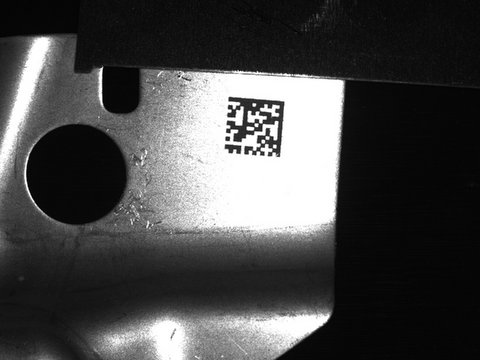
Reading of lasered datamatrix codes on sheet metal parts
In production, components must be identified. There is a risk of confusion between similar components during assembly. High costs can be incurred if the wrong component is identified after installation.
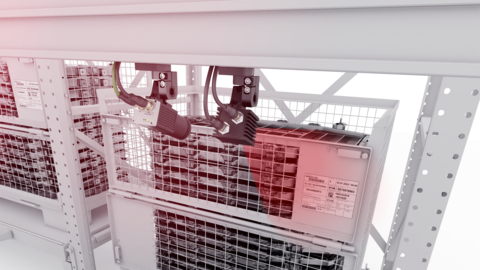
Reading the delivery note
In order to guarantee the traceability of the components installed in a battery pack, the codes on the delivery notes attached to the transport boxes are read with a sensor. The contents can consist of one-dimensional barcodes, two-dimensional data matrix codes or plain text.
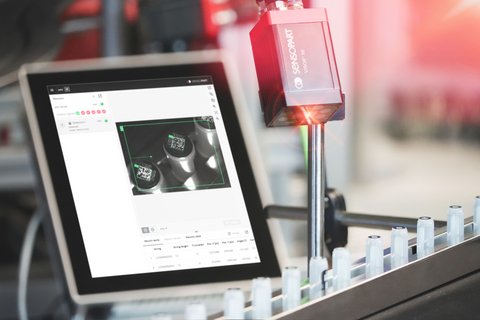
Reliable Data Matrix Code Reading on Vial Caps in Pharmaceutical Production
In pharmaceutical production, precise traceability of medication batches is critical. An important part of this is reliably capturing DataMatrix codes on vial caps. These codes contain batch numbers, expiration dates, and product identifiers, which are vital for quality assurance, logistics, and regulatory compliance. The system must capture these codes accurately and consistently, even at high production speeds and under challenging conditions.

Visualisation of entire process with SensoWeb
Throughout the production process, a large quantity of data is generated that has to be monitored and checked. The operator must be able to consult, manage and evaluate this data easily in order to identify and implement any necessary modifications to the process.