
Exemplos de aplicação
Os exemplos de aplicação seguintes mostram-lhe as utilizações possíveis dos nossos produtos na prática.
Filter application examples
12 Application examples match your search criteria
Automated Manufacturing and Assembly of COVID-19 Test Kits
To streamline the production of COVID-19 test kits, automated assembly of the tests is necessary. The test kits consist of several components. To automate their assembly, the rotation direction as well as the prone/ spine position of the individual parts must be determined. Only then can the kits be correctly assembled by the machine.
Comparing Plain Text and DMC-Codes
In modern production facilities, where traceability and quality control are essential, reading OCR and DMC codes on components plays a key role. These codes are used not only for identification, but also to ensure complete traceability of products and components throughout complex manufacturing processes. A reliable vision system must not only recognize OCR and DMC codes, but also compare them against each other.
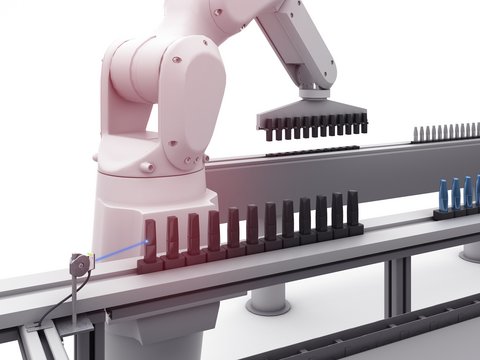
Detection of lipsticks
In the manufacture of lipsticks in the cosmetics industry, lipsticks sometimes have to be detected by optical sensors. Here, the lipsticks must be recognized quickly and reliably, regardless of their shape and color.

Effortless Traceability: Displaying code contents, texts,
In modern manufacturing, the need for seamless component traceability (Track-and-Trace) continues to grow. Data Matrix Codes (DMCs) have emerged as one of the most reliable methods for identification and traceability. The goal is to scan the Data Matrix Code on each component, guaranteeing precise product processing and flawless serial number management.
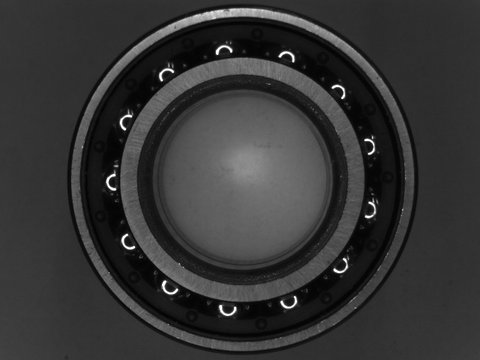
Full count of balls in a ball bearing housing
When manufacturing ball bearings, it is vital to know that the bearing has the full number of balls. The aim of the application is to inspect a ball bearing after assembly to ensure it is complete.
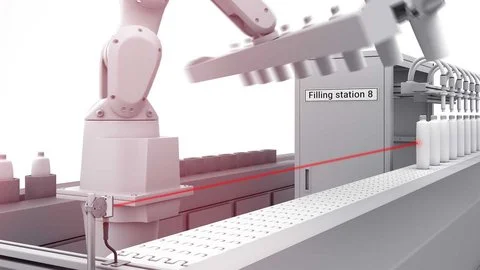
Presence and absence control of PET bottles on conveyor lines
In high-performance bottling plants, tens of thousands of bottles can be transported on conveyor belts every hour. With the help of robots, the PET bottles are automatically placed on the conveyor line. Depending on whether the belt is free or not, the robot should place additional PET bottles on the conveyor line. An optical detection system should monitor whether the conveyor line is free or occupied in a certain area (area monitoring) and provide the robot with a trigger signal.

Presence of glass bottles
When filling glass bottles or labelling bottles, it is essential to be sure that the bottle is present under the tool in the machine.
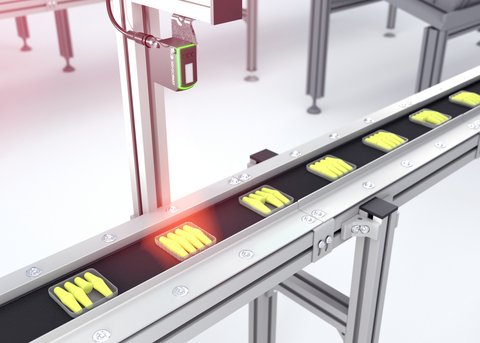
Reliable Completeness Check for Earplugs on the Conveyor Belt
In packaging inspection, every detail counts—even small deviations can lead to customer complaints or unnecessary waste. This is especially true in earplug packaging, where it’s essential to verify that every box contains the correct number of items before sealing. A sensor performs this check, ensuring each box reaches the customer fully complete and accurate, preventing faulty packaging from the start.
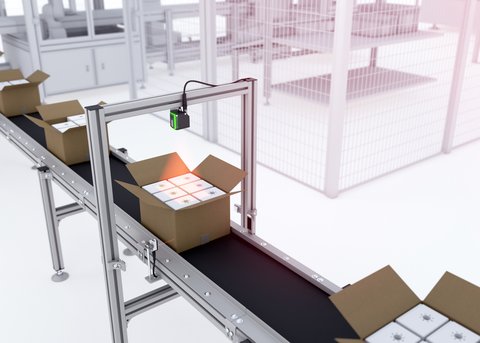
Reliable Completeness Check of Storage Boxes
Storage boxes are essential for efficient transport and storage in automated systems. Before shipping, it’s critical to ensure that each box is fully loaded. This prevents consumer complaints and ensures consistently high process quality. A sensor is used to perform this completeness check.
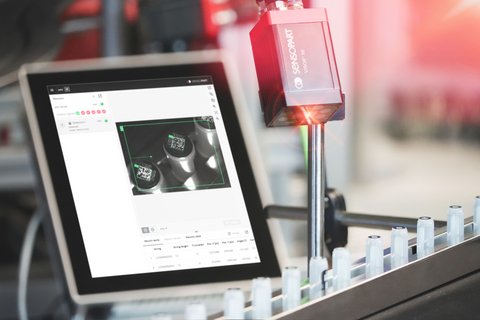
Reliable Data Matrix Code Reading on Vial Caps in Pharmaceutical Production
In pharmaceutical production, precise traceability of medication batches is critical. An important part of this is reliably capturing DataMatrix codes on vial caps. These codes contain batch numbers, expiration dates, and product identifiers, which are vital for quality assurance, logistics, and regulatory compliance. The system must capture these codes accurately and consistently, even at high production speeds and under challenging conditions.
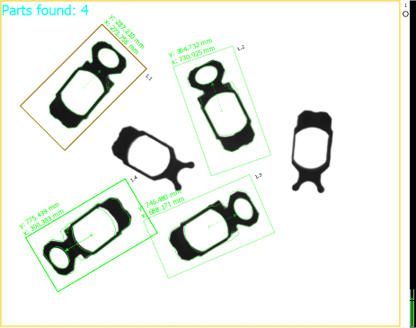
VISOR® Makes Component Positions Visible
A robot is tasked with picking components from a flexible feeding platform. The position of the objects may vary. A vision sensor can identify and relay the exact position of the part to the robot.

Visualisation of entire process with SensoWeb
Throughout the production process, a large quantity of data is generated that has to be monitored and checked. The operator must be able to consult, manage and evaluate this data easily in order to identify and implement any necessary modifications to the process.